
MAHA Games Withdrawal Verification India Process
Withdrawal verification is a core part of how modern online gaming platforms operate in India, and on MAHA Games it is treated as a foundational layer of trust between the player and the system. While gameplay feels instant—whether it is Slots Games, bonus rewards, or competitive features—the withdrawal stage is intentionally structured to be more controlled and carefully validated.
At its essence, withdrawal verification is the process that confirms whether the person requesting a payout is genuinely entitled to receive the funds. It connects identity, payment details, and gameplay behavior into one unified trust check. Without this layer, any digital gaming platform would face significant exposure to fraud, duplicate accounts, and unauthorized transactions.
Why Verification Becomes Necessary
The reason this system exists is not to slow down users but to stabilize the entire financial ecosystem behind the platform. In India, where digital payments through UPI and instant banking are extremely fast, money can move in seconds. That speed is convenient for players, but it also increases the risk of misuse if no verification exists.
When a user requests a withdrawal, the system needs to ensure that the winnings actually belong to that account and that the funds are not being redirected through fake or stolen identities. This becomes even more important after user activity such as Login Bonus claims or Sign up rewards, where new accounts are frequently monitored more closely due to higher risk patterns.
How the System Thinks During a Withdrawal Request
Instead of treating every withdrawal the same way, the system evaluates each request dynamically. A user who has consistent activity, stable device usage, and matching payment information will typically pass through the process faster. On the other hand, unusual behavior—such as switching devices frequently, using mismatched payment details, or attempting multiple withdrawals in a short time—can trigger additional checks.
Even entry methods like APK Links can influence initial risk scoring because the platform evaluates where and how the account was created, not just how it is used later.
This approach is known as risk-based verification, meaning the system adjusts its level of strictness depending on the user’s behavior profile.
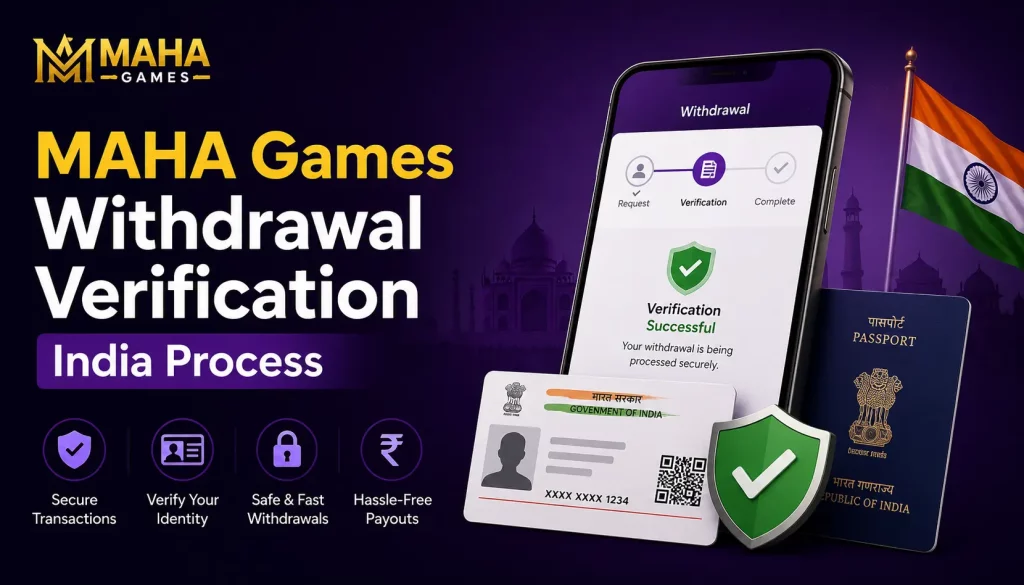
The Logic Behind the Verification Flow
Instead of one single check, withdrawal verification works as a layered sequence. Each layer is designed to filter out specific risks gradually. First, the system performs an automated screening of the request, analyzing behavioral signals and account history. If everything appears normal, the process may continue automatically without user interruption.
However, if the system detects uncertainty, it moves to identity verification, where documents or additional confirmation steps may be required. Only after both identity and payment ownership are confirmed does the system proceed to final approval and fund release.
This layered approach is important because it avoids blocking legitimate users unnecessarily while still maintaining strong protection against suspicious activity.
Verification Flow Logic (Dark UI)
| Phase | What Happens | Why It Matters |
|---|---|---|
| Request Entry | Withdrawal request is registered in system | Starts verification pipeline |
| System Analysis | Behavior and device patterns are checked | Detects unusual activity early |
| Identity Validation | KYC or verification prompts may appear | Confirms real user ownership |
| Payment Matching | Bank or UPI details are verified | Ensures funds go to correct owner |
| Final Decision | Approval or rejection is processed | Completes withdrawal cycle |
Security vs Convenience Balance
One of the most important aspects of withdrawal verification is maintaining a balance between security and user convenience. If the system is too strict, genuine players may feel frustrated. If it is too relaxed, fraud risks increase significantly.
To solve this, MAHA Games uses a flexible verification model where low-risk users experience faster withdrawals, while higher-risk activity triggers deeper checks. This ensures that honest players are not unnecessarily delayed, while suspicious activity is still properly filtered.
Why This Matters for Players
For most users, verification is simply a short stage between winning and receiving funds. However, behind the scenes, it is one of the most important systems that keeps the platform stable, fair, and financially secure.
Understanding this process helps players avoid confusion when withdrawals are marked as pending or require additional confirmation. Instead of being a barrier, verification should be seen as a protective mechanism that ensures every payout is legitimate and traceable.
After understanding the logic behind withdrawal verification, the next step is the most practical part of the entire system: identity confirmation. On MAHA Games this stage is known as KYC (Know Your Customer) verification, and it is the point where the platform confirms who the user really is before releasing any funds.
This step is especially important in India because digital payments are extremely fast, and systems like UPI or instant bank transfers can move money within seconds. Without identity validation, it would be impossible to ensure that withdrawals are going to the correct and rightful owner.
What Identity Verification Really Means
Identity verification is not just about uploading documents. It is a full consistency check between three core elements: who the user claims to be, what documents confirm, and how the payment method is registered.
If even one of these elements does not match, the system may pause the withdrawal for review. This is why users sometimes see pending status after requesting payouts following Login Bonus, Sign up, or gameplay in Slots Games.
The goal is simple: ensure that the person receiving money is the same person who earned it.
Main Documents Used in India
In most cases, users in India are asked to provide standard government or financial identity documents. These are used because they are widely recognized, difficult to fake, and directly linked to real identity databases.
The most important document is usually Aadhaar, which confirms identity details such as name and age. PAN card is often used as an additional verification layer, especially for larger withdrawals. Bank account or UPI details are required to ensure that the money is sent to an account owned by the same person.
Selfie verification is also commonly used as a real-time confirmation step. It helps match the live user with the submitted documents, reducing the risk of identity misuse.
Why Documents Get Rejected
One of the most frustrating parts for users is document rejection, but in most cases, it happens due to simple technical or formatting issues rather than serious problems.
Blurry images, mismatched names, cropped documents, or outdated ID cards are among the most common reasons. Sometimes users upload screenshots instead of original images, which can also lead to rejection. Even small differences in spelling between bank accounts and ID cards can trigger a verification failure.
This is why accuracy and clarity are more important than speed when submitting documents.
Document Validation Overview (Dark Mode)
| Document Type | Purpose | Verification Focus |
|---|---|---|
| Aadhaar Card | Primary identity proof | Name, age, identity match |
| PAN Card | Financial identity validation | Tax & identity consistency |
| Bank Account | Withdrawal destination | Name + account ownership match |
| UPI ID | Fast payout routing | Phone-linked verification |
| Selfie Check | Live identity confirmation | Face match with documents |
How the System Evaluates Documents
When documents are uploaded, the system does not simply approve or reject them instantly. Instead, it evaluates multiple factors at once, including clarity, consistency, and authenticity signals.
For example, if a user uploads a clear Aadhaar card but the bank account name differs slightly, the system may pause the withdrawal for manual review instead of rejecting it immediately. This ensures fairness and avoids unnecessary blocking of real users.
In many cases, the system also compares user behavior patterns before making a final decision. Stable accounts with consistent activity are usually processed faster than newly created or irregular accounts.
Common Mistakes Users Make
Many delays in withdrawal verification happen due to avoidable mistakes. Users sometimes rush the process and upload low-quality images or incorrect details. Another common issue is using different names across payment methods and identity documents.
Even small inconsistencies can trigger system flags. For example, using initials in one document and full names in another can cause a mismatch. Similarly, expired documents or outdated addresses can slow down approval.
Understanding these details significantly improves approval speed and reduces rejection chances.
Document Issue Frequency (Hover Details Included)
Why Accuracy Matters More Than Speed
One of the key lessons in withdrawal verification is that accuracy always matters more than speed. Submitting documents quickly does not guarantee faster approval if the information is incorrect. In fact, rushed submissions often increase processing time because they require additional review cycles.
A careful, one-time correct submission is always faster than multiple corrected attempts.
How Withdrawal Processing Actually Works
When a withdrawal request reaches this stage, the system first validates whether all previous checks are fully complete. If everything is clear, the request is forwarded to a payment routing engine that selects the fastest available channel.
From there, the money is sent either through UPI networks, direct bank transfers, or wallet systems. The speed depends heavily on which channel is used and how busy the banking infrastructure is at that time.
Users who complete verification cleanly usually experience near-instant processing, while those requiring manual review may face delays.
Key Payment Methods in India
In India’s gaming ecosystem, three main payout channels dominate:
UPI is the fastest option because it connects directly to mobile banking apps and allows real-time transfers. Wallet systems also process quickly because they operate inside closed digital ecosystems. Bank transfers, while reliable, depend on banking hours and interbank settlement cycles, which can sometimes slow down processing.
Each method has different strengths, and the system automatically selects the best route based on availability and user history.
Factors That Affect Withdrawal Speed
Withdrawal speed is not fixed. It changes depending on multiple system-level and user-level conditions. High platform traffic can slow down processing, while clean verification history can significantly increase speed.
Another important factor is consistency. Users who always use the same payment method tend to receive faster approvals compared to those who frequently change banking details.
Risk scoring also plays a role. If the system detects unusual behavior, it may temporarily route the request for manual review.
Withdrawal Speed Comparison (Dark Theme)
| Payment Method | Average Time | Reliability Level |
|---|---|---|
| UPI | 5 – 30 minutes | Very High |
| E-Wallets | Instant – 1 hour | High |
| Bank Transfer | 1 – 12 hours | High |
| Manual Review Cases | 24 – 48 hours | Medium |
Why Some Withdrawals Get Delayed
Delays usually happen when the system detects inconsistencies or when external banking networks are overloaded. It is important to understand that delays are not always negative—they often indicate that the system is performing additional safety checks.
In many cases, withdrawals are temporarily paused due to verification synchronization issues between payment gateways and identity systems. Once everything is aligned, the payout is released automatically.
Withdrawal Speed Distribution
What This Chart Shows
This pie chart represents how withdrawal processing is distributed across different payment channels. The largest portion belongs to UPI because it is the fastest and most widely used method in India.
Wallet systems also take a significant share because they allow instant internal transfers. Bank transfers are slightly slower due to external banking dependencies, while manual review cases form the smallest but slowest segment.
The key insight is that most withdrawals in a healthy system should stay in the fast-processing categories (UPI and wallets), which together dominate the flow.
Common Problems Users Face During Withdrawal
Most issues during withdrawal verification are not system failures but mismatches between user input and system expectations. One of the most frequent problems is pending status that lasts longer than expected. This usually happens when additional background checks are triggered due to inconsistent identity or payment data.
Another common issue is repeated document rejection. This is typically caused by low-quality uploads, unclear text, or differences between registered account details and submitted KYC documents. Even small inconsistencies, such as spelling variations in names, can trigger review delays.
There are also cases where withdrawals are temporarily paused due to payment gateway congestion or banking delays. These are external system factors and usually resolve automatically once the network stabilizes.
Withdrawal Issues & Fix Strategy
| Issue Type | What Happens | Main Cause | Best Fix |
|---|---|---|---|
| Pending Withdrawal | Request stays in processing status | Extra verification or risk check | Wait for system review (no action needed) |
| Document Rejection | KYC not approved | Blurry or mismatched documents | Re-upload clear original documents |
| Payment Mismatch | Withdrawal blocked | Bank/UPI name mismatch | Use same name across all accounts |
| Delayed Transfer | Approved but not received | Bank network congestion | Wait 1–12 hours or check bank status |
| Manual Review Hold | Account under review | Risk scoring trigger | Complete verification if requested |
How Users Can Fix Most Issues
In most cases, withdrawal problems can be resolved without contacting support. The key is consistency and accuracy across all identity and payment details. Uploading clear, original documents instead of screenshots significantly improves approval speed.
Users are also encouraged to maintain the same payment method across multiple withdrawals, as frequent switching can trigger additional risk checks. Ensuring that the name on the bank account matches the KYC documents is one of the most important success factors.
If a withdrawal remains stuck for an extended period, it usually indicates that the system is performing additional verification rather than rejecting the request outright.
The withdrawal verification system is not designed as a barrier but as a structured financial safety mechanism. It connects identity validation, payment ownership, and transaction security into a single flow that protects both users and the platform.
For players, the most important takeaway is that almost all delays or issues come from data inconsistency rather than system failure. Once identity and payment details are fully aligned, withdrawals typically process smoothly and quickly.
In practice, the system prioritizes three things: accuracy, security, and traceability. Speed comes naturally once those conditions are met.
Withdrawal Verification FAQ
Why is my withdrawal still pending?
Most pending withdrawals occur due to ongoing verification checks, payment routing delays, or additional security validation triggered by system risk scoring.
How long does withdrawal verification take?
Verification usually takes from a few minutes up to 24 hours depending on document accuracy, account history, and payment method used.
Why was my document rejected?
The most common reasons include blurry images, mismatched names, expired documents, or uploading screenshots instead of original documents.
Can I speed up my withdrawal?
Yes. Using consistent payment methods, submitting clear KYC documents, and avoiding repeated changes in account details significantly improves processing speed.
What happens if verification fails completely?
In most cases, the system allows users to re-submit corrected documents instead of permanently rejecting the account, ensuring a fair review process.






Comments